
How do I export my translations from Lovalingo before it shuts down?
Lovalingo closes Aug 31. How to export your translation bundles, convert them to PO catalogs in your repo, and never lose translations again.
Read article →
Blog
Deep dives on AI-generated codebases, localization architecture, and how to keep your product multilingual without rewrites.
Lovalingo closes Aug 31. How to export your translation bundles, convert them to PO catalogs in your repo, and never lose translations again.
Read article →Locize starts at $7 and LocaFlow at $9, but the sticker price is the least interesting number on a localization pricing page. Here is what thirteen tools charge at entry, what each one meters, and what that means at 10,000 keys across 5 locales.
Read article →Self-hosted Tolgee is the only route with no licence fee and no key limit. Every hosted free tier stops somewhere small, and the do-it-yourself route bills you in evenings. Here is what the zero-cash options really cost.
Read article →Lovalingo closes on August 31, 2026, and runtime translations disappear with the service. Compare the realistic alternatives for Lovable apps, from committed catalogs you own to runtime widgets that rent your languages back to you.
Read article →
Your Lovable app is translated, the switcher works, and Google still shows only English. Give every language its own URL, wire the switcher to navigate, and emit reciprocal hreflang so each locale can rank.
Read article →
Most Lovable apps run the classic Vite plus React SPA stack, the one the recent i18n tooling wave skipped. Here is how to add i18n with committed Lingui PO catalogs that sync on every push, with no runtime widget and no vendor lock-in.
Read article →
Lovalingo closes on August 31, 2026, and its runtime translations shut off with it. What breaks, what to export, how to remove it cleanly, and how to rebuild your languages as files in your own repo — with three months of usage free for migrators.
Read article →
The best way to localize an app Claude Code generated is to stay in the agent: one command installs a localization skill, Claude Code wires the i18n, and translations arrive as pull requests on every push. The full loop, from English-only repo to merged multilingual PR.
Read article →
SEO translation adapts your pages, keywords, and metadata so translated pages actually rank, not just read correctly. Here is how it differs from plain translation, the technical layer search engines require, and the workflow that survives constant shipping.
Read article →
An AI localization agent keeps your app translated inside your coding workflow, not in a separate dashboard. Here is what it does, how it differs from machine translation, and what infrastructure it needs to be reliable.
Read article →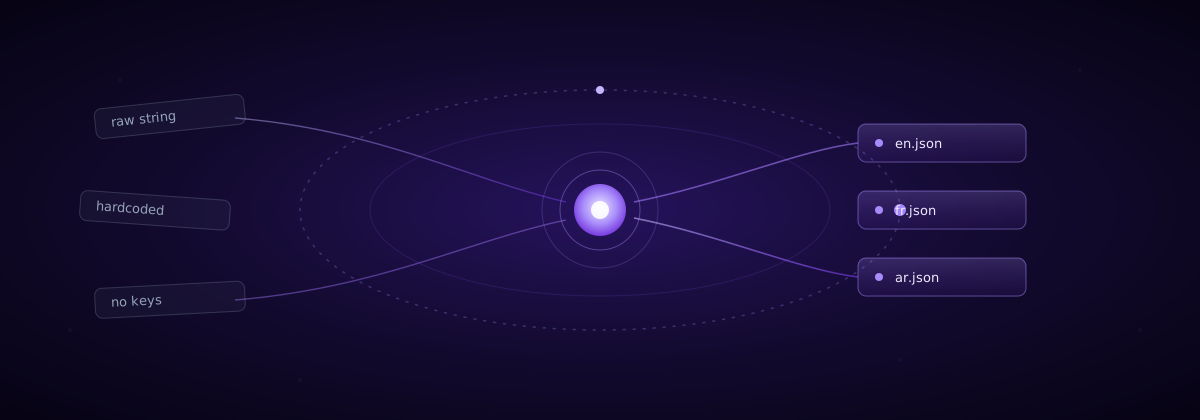
The globalize.now MCP server lets Claude Code, Cursor, and any MCP client run localization from your editor: create projects, translate locale files, and open Git translation PRs. It does the backend; the skill still internationalizes your code.
Read article →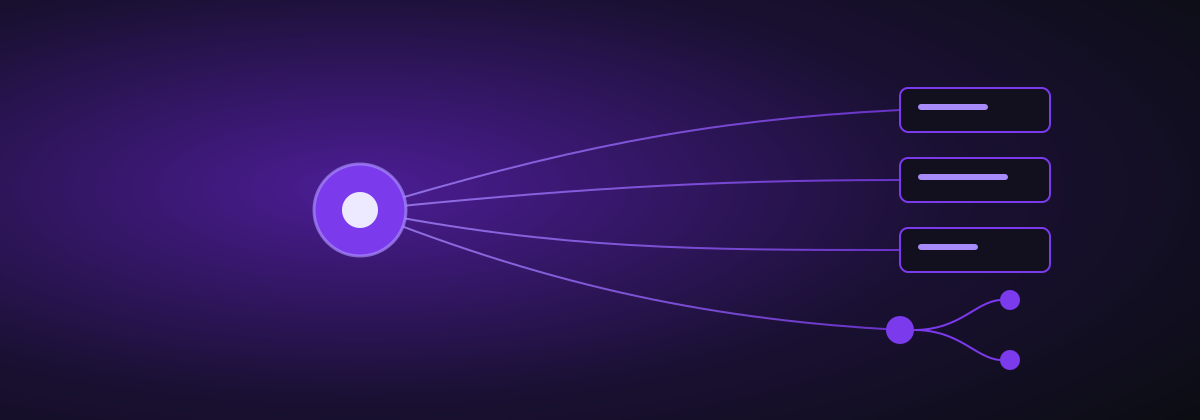
An AI agent can translate text, but it cannot make an app multilingual on its own. Here is the agent-native way to ship a multilingual app from Cursor, Claude Code, or Lovable, and where the infrastructure layer fits.
Read article →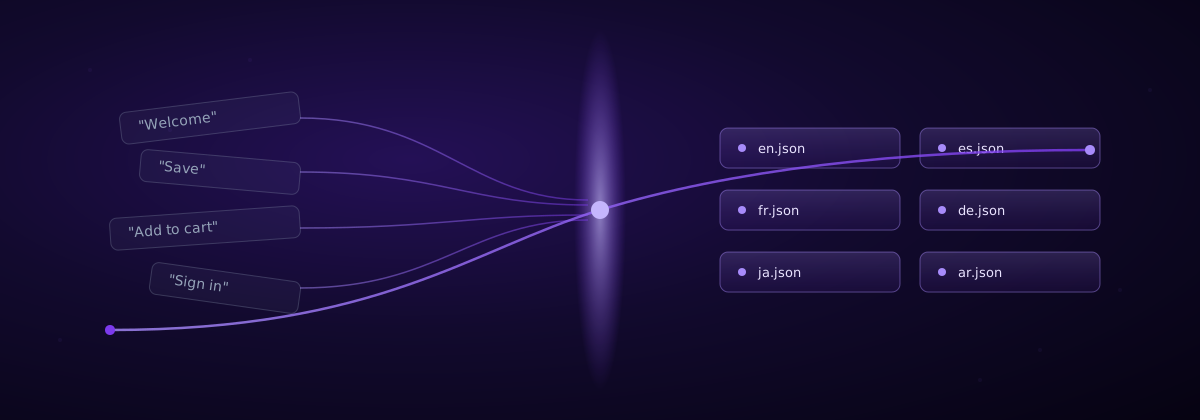
New Lovable projects ship on TanStack Start with SSR, which breaks the runtime translation widgets most guides still recommend: they flash English and get indexed in the wrong language. Committed Lingui PO catalogs render each locale on the server and stay in sync on every push.
Read article →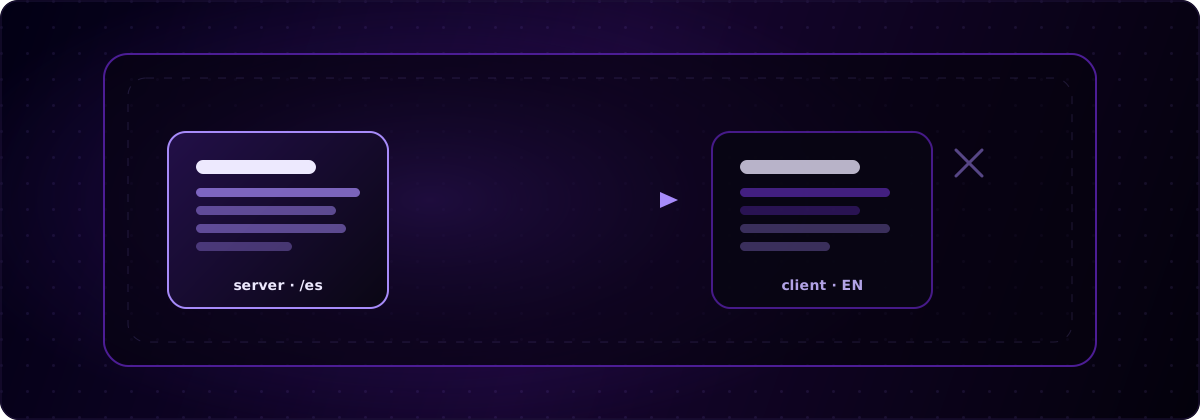
Software localization adapts an app for a specific language, region, and market, well beyond translation. Here is what it includes, how it differs from internationalization, and how to do it without i18n debt in AI-generated apps.
Read article →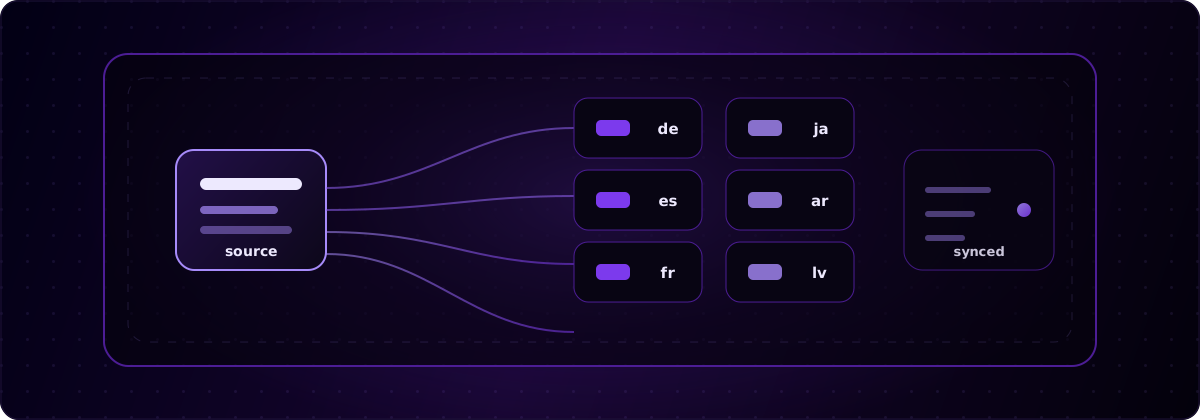
Weglot translates a Lovable app at runtime in the browser; globalize.now commits Lingui PO catalogs to your repo and syncs them on every Git push. Here is how the two compare on SEO, pricing, and ownership.
Read article →
Lovalingo and Weglot translate Lovable apps at runtime in the browser; globalize.now commits translated catalogs to your repo and syncs them on every Git push. Here is how the three approaches differ.
Read article →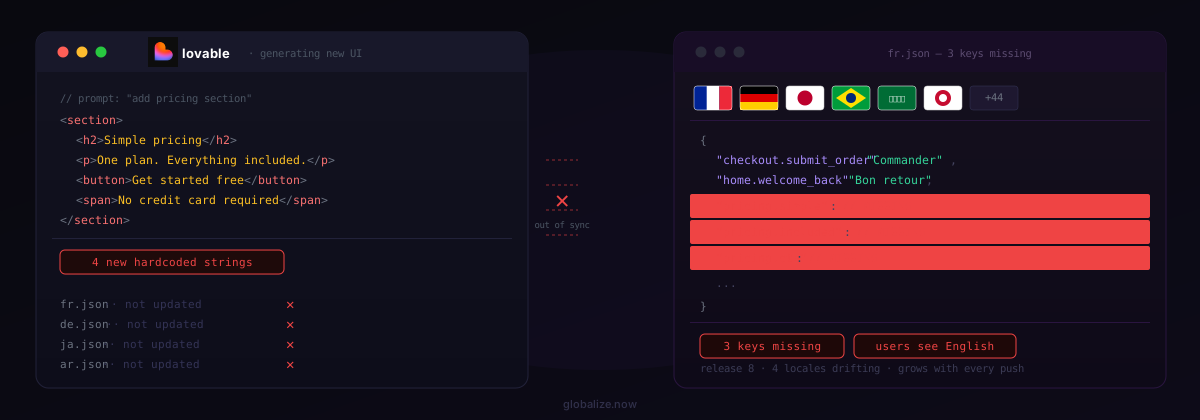
ICU MessageFormat packs plurals, gender, and variables into one translatable string, but its syntax was built for code, not translators. Here is why it is still hard to localize, what MessageFormat 2.0 changes, and where it breaks in AI-generated apps.
Read article →
Lokalise paid plans start at $144/mo, billed annually and priced per seat. For a solo dev keeping locale files in sync, the real bill climbs with seats and word caps — while per-workspace pricing with no per-seat or per-language charges keeps it predictable.
Read article →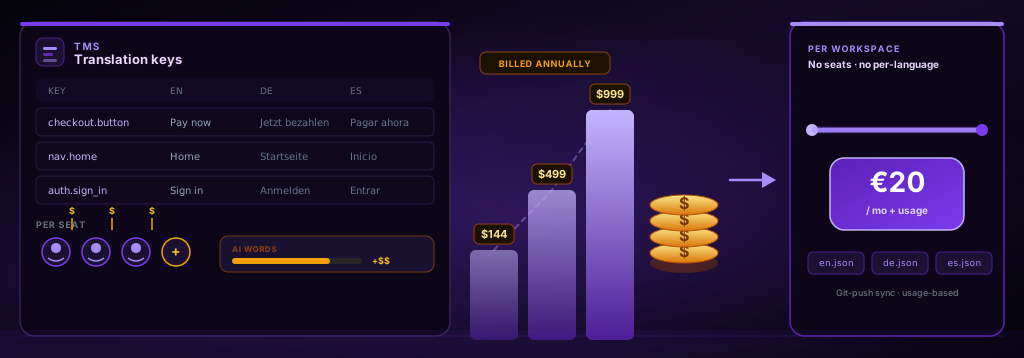
Most Lovable multilingual guides stop at the first build. This one shows the durable setup: Lingui PO catalogs, the lovable-i18n skill, and automatic translation sync so your app stays fully translated as you keep shipping.
Read article →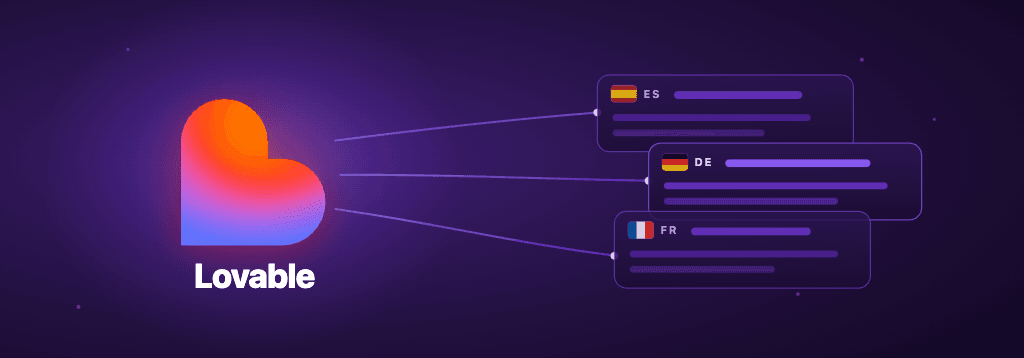
The next localization default is an open agent skill: repo-native instructions your coding agent reads, applies, and leaves as standard locale files, without a new SDK or hosted MCP dependency.
Read article →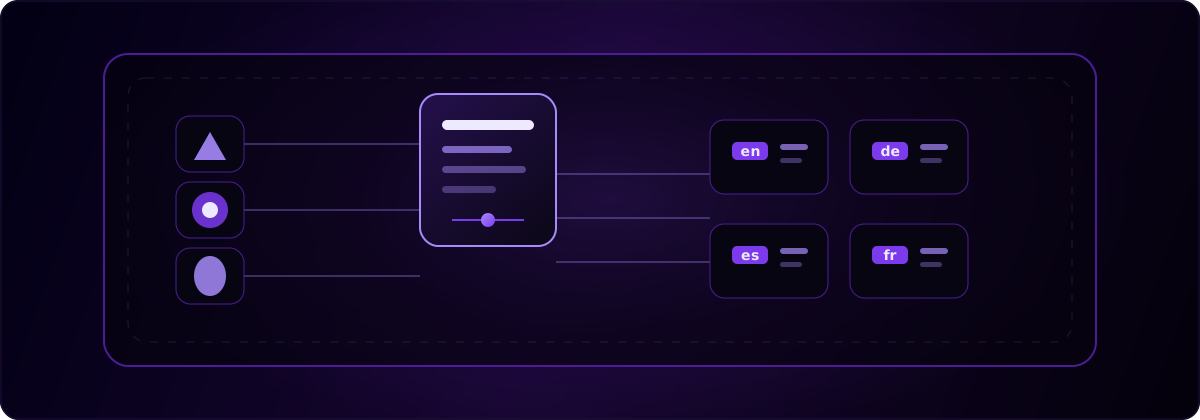
Tolgee, Locize, SimpleLocalize, LocaFlow, Prismy, Weglot, POEditor, Crowdin, Lingo.dev and Languine mapped by price and fit, re-verified August 2026. For AI-coded apps with no keys yet, the real gap is upstream string extraction, and globalize.now handles that on every Git push.
Read article →
Agent Skills are spreading across Claude Code, Cursor, and Codex. npx skills add globalize-now/globalize-skills installs the localization Skill. Here is why that slot is becoming the default.
Read article →
If next-intl, i18next, or Lingui is already in your repo, L1 mode skips the destructive scaffold: no routing rewrite, no surprise switcher, just locale PRs on every push. Detection signals, hard boundaries, recovery if the wrong branch runs.
Read article →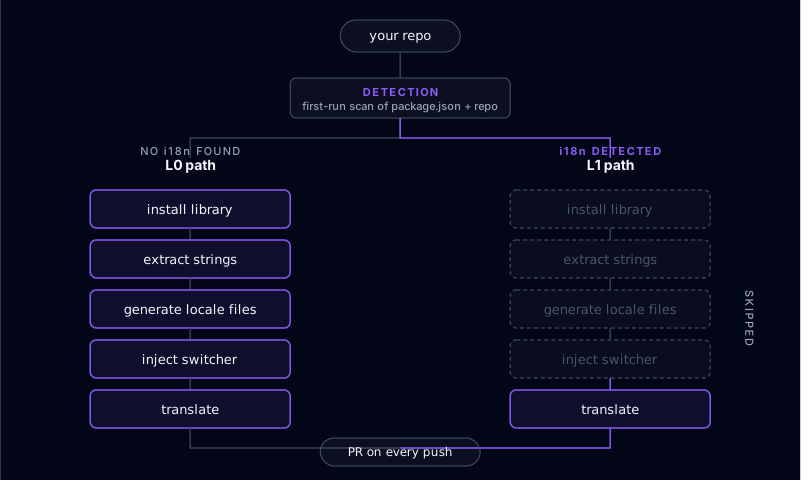
Install one CLI, send Cursor one prompt, and turn a hardcoded English Next.js App Router project into a multilingual app with next-intl keys, locale files, and Git-push translation sync.
Read article →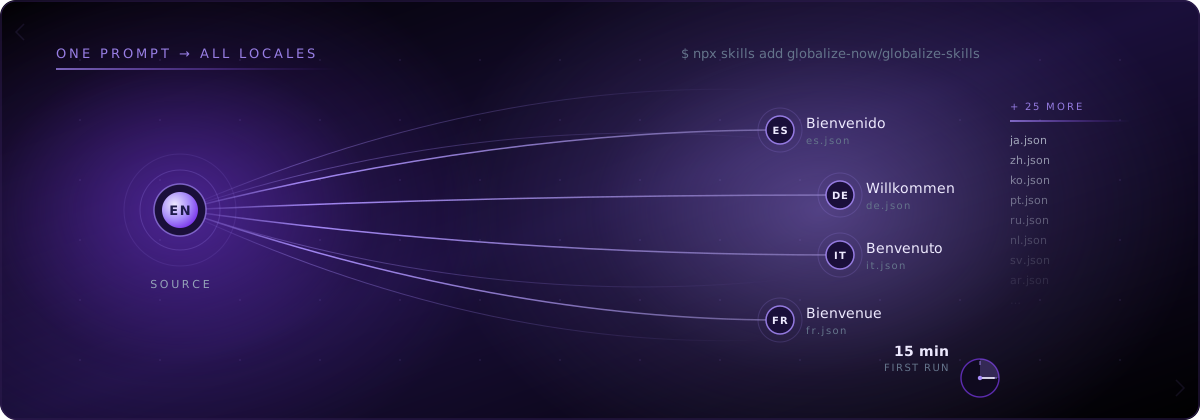
We pointed our AI agent at a production monorepo with Next.js, Android, and MCP servers mixed together. Here is exactly what happened: 28 UI string candidates extracted, 41 entries converted, 5 languages added, and production-quality translations confirmed.
Read article →
Lovable prompts keep rewriting UI with new hardcoded strings while PO catalogs fall behind. Here is why that gap widens every release and how Git-native i18n sync closes it without abandoning your builder.
Read article →We audited our own five-locale marketing JSON. Cyrillic in German, formal Sie and vous on a dev tool, invented euros, encoding false friends, and shipping verbs that meant parcels. Then we wrote policy and a verify script so it regresses less quietly.
Read article →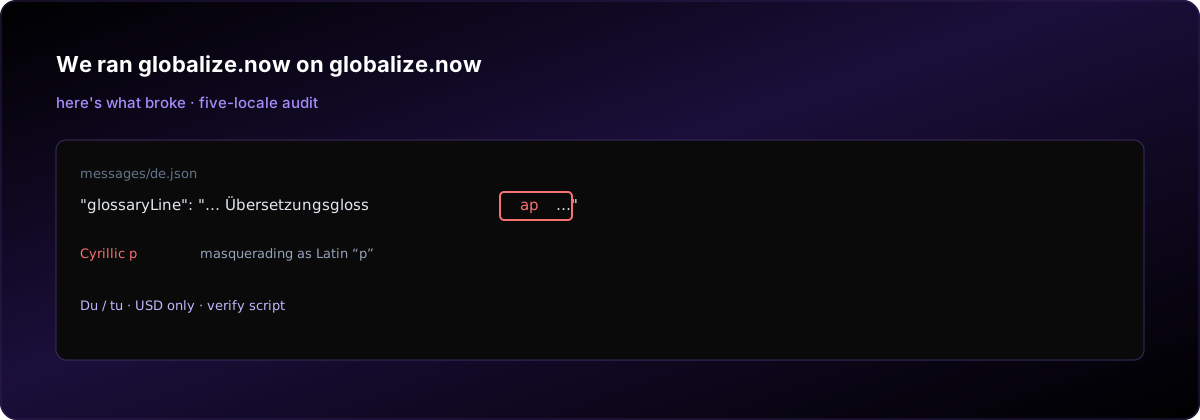
Install agent skills, run five prompts, and go from hardcoded English to synced locales and a language switcher—without weeks of manual i18n work.
Read article →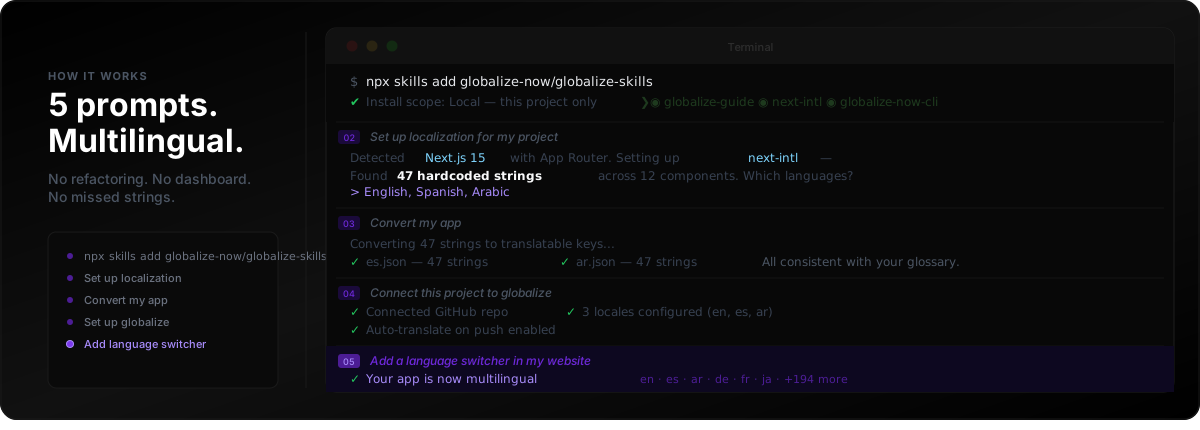
English reaches a fraction of the world's online users, yet half the web stays English-only. Here's the conversion data, the ROI case, and why AI-built apps make 'later' more expensive than ever.
Read article →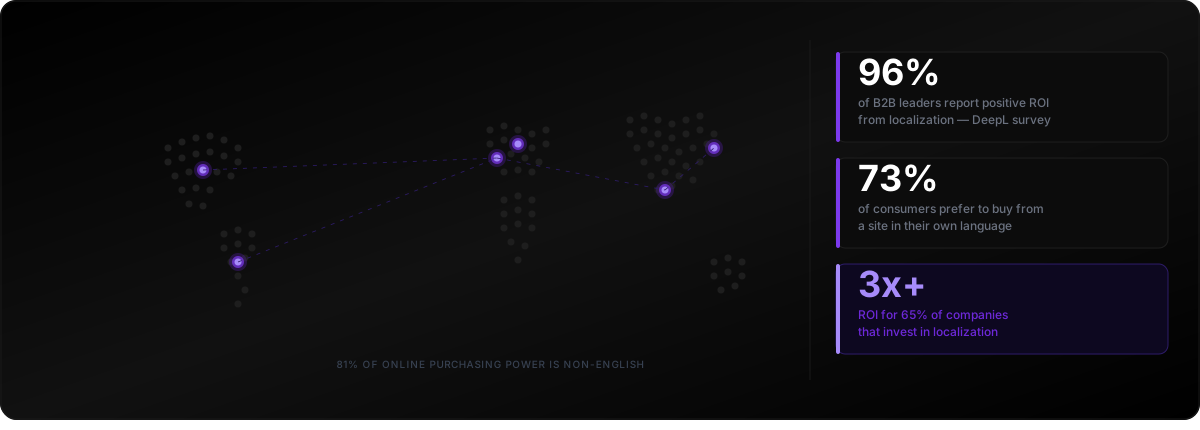
Map the full stack in three layers — i18n architecture, translation management, and execution engines — so you know which tool to reach for first when your app is still mostly hardcoded English.
Read article →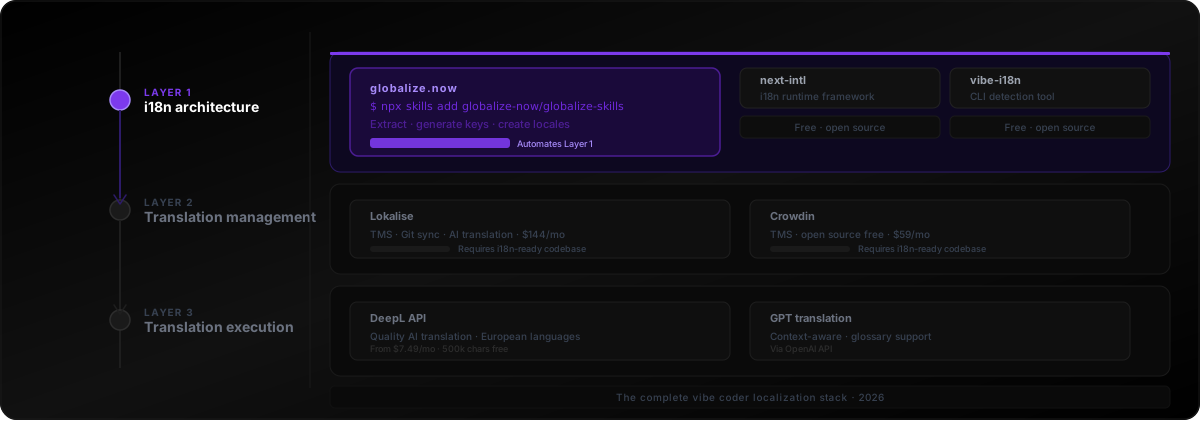
Lokalise and Crowdin shine at translation workflows — once your app already speaks in keys and locale files. Most AI-built products skip that step. Here is how to think about tooling when your codebase is still the wild west.
Read article →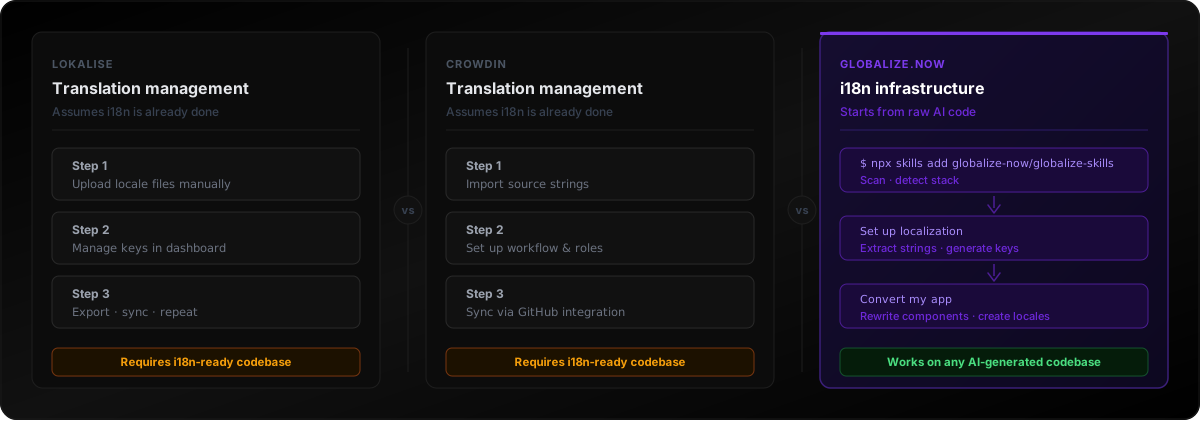
You do not need to throw away an AI-built codebase to support new languages. Start with i18n architecture, extract strings into keys and locale files, then layer glossaries and automated translation with real QA.
Read article →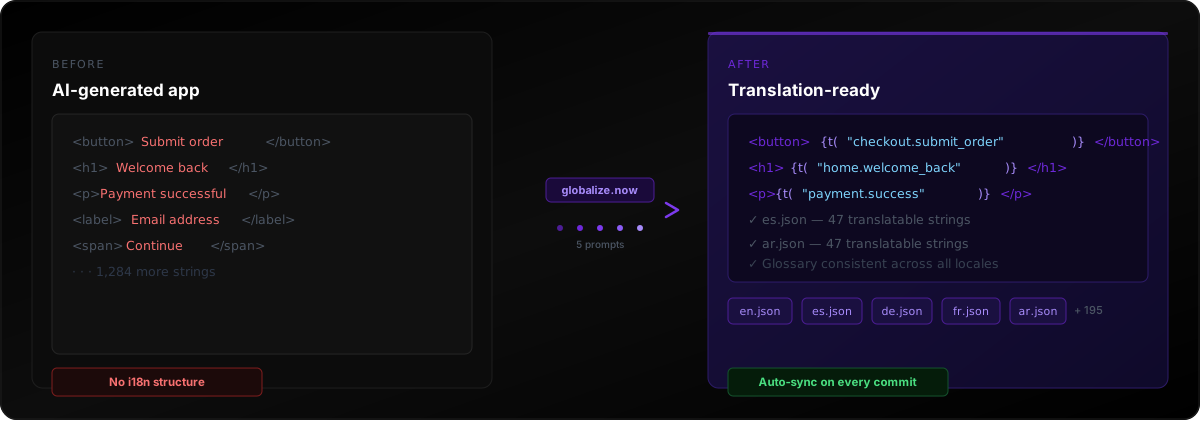
Localization didn't start with AI, It didn't even start with TMS's, It started decades ago with tools built for translators, not product teams. And that legacy still shapes how the industry operates today.
Read article →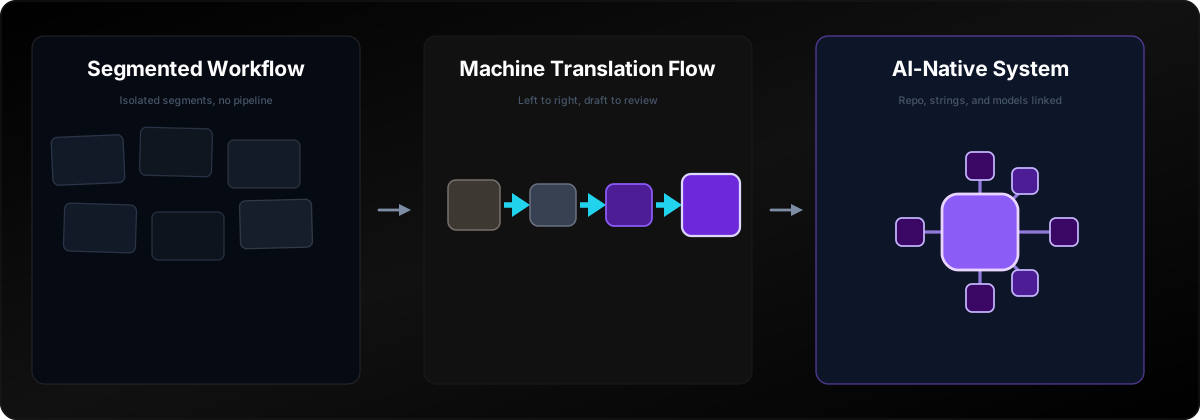
Traditional localization tools assume your app is already internationalized. Most modern AI-generated apps are not.
Read article →